Raja Kirik
Live
Territory: Worldwide
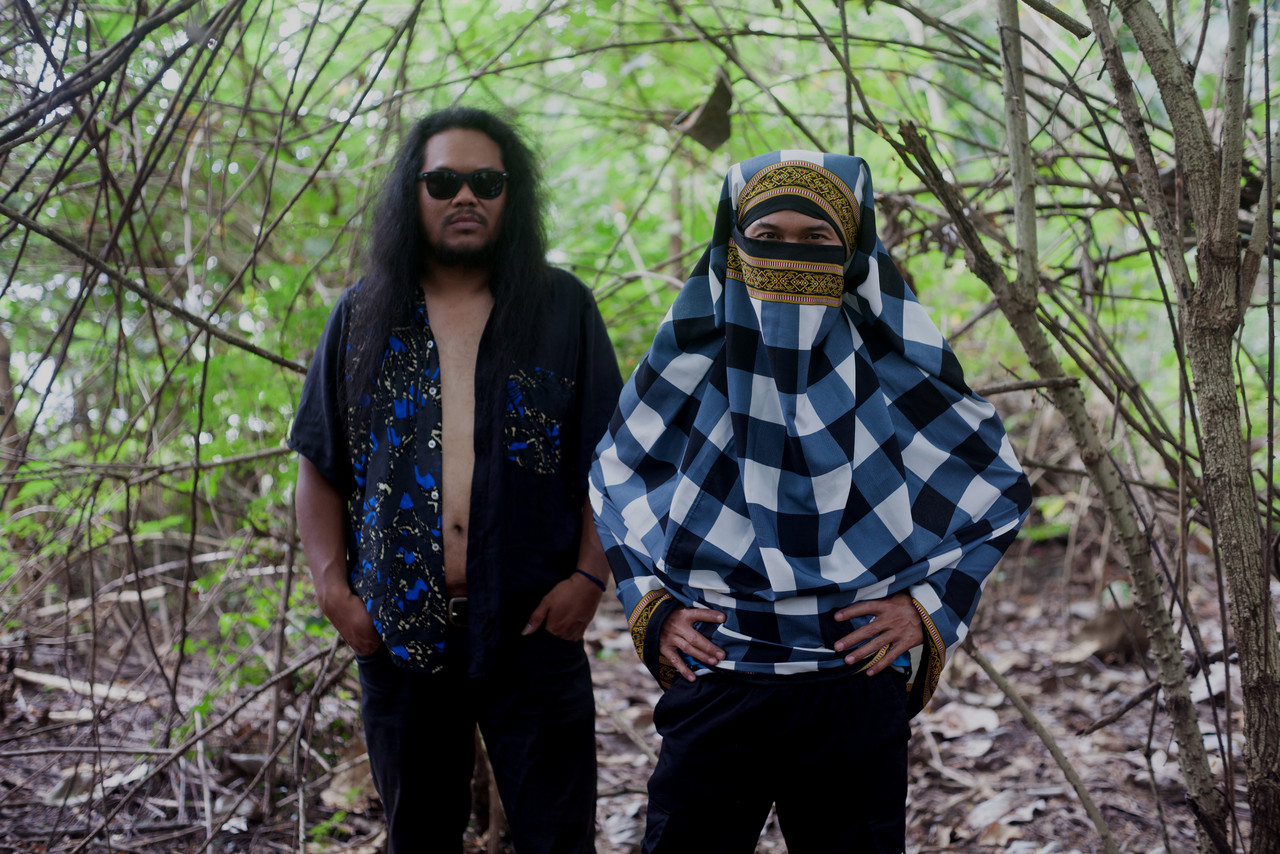
The result of extensive artistic research into the island’s history, Raja Kirik considers the violence, oppression, and resistance that has shaped Java. At the time of Dutch colonialism, trance dances served the Javanese as an expression of their ardent desire for freedom and their rejection of colonial rule. Ariendra and Pribadi show how music, dance, and ritual still provide narrative means today to assert oneself against foreign rule and violence. These explorations can be heard on their eponymous 2018 album on Yes No Wave, as well as the follow up record Rampokan, that arrived June 2020 via Yes No Wave and Nyege Nyege Tapes, and in their latest album, The Phantasmagoria of Jathilan, that was released on Yes No Wave in July 2023 ahead of the premiere of a new 4-piece live show on tour in Autumn 2023 and Spring 2024.
For »The Phantasmagoria of Jathilan« Raja Kirik team up with acclaimed singer Silir Pujiwati, and dancer and choreographer Ari Dwiyanto for an artistic investigation into the jathilan horse dance, and a contemporary re-interpretation of its musical, vocal, and dance forms. The current form of the jathilan trance dance can be understood as a reenactment of battles fought in the Java War (between Javanese rebels and the colonial Dutch empire from 1825 to 1830), and as a folk practise to grapple with the defeat by the Dutch Empire and the devastation caused by the civil war between the Javanese population and the Javanese aristocracy who supported the Dutch. In jathilan people use stick horses made of bamboo as a form of appreciation as well as an expression of support for rebel leader Prince Diponegoro's horsemen, who fought bravely against the Dutch colonial forces. Despite the rebels’ defeat, jathilan itself always depicts an imaginary victory, against demons, monsters, or the colonisers.This heroic performance therefore has multiple purposes: to entertain, to encourage, to heal, to regain strength despite defeat, and ultimately, to unite people against oppression, which in today’s context also translates to struggles against the reckless exploitation of natural and human resources through global capitalism.
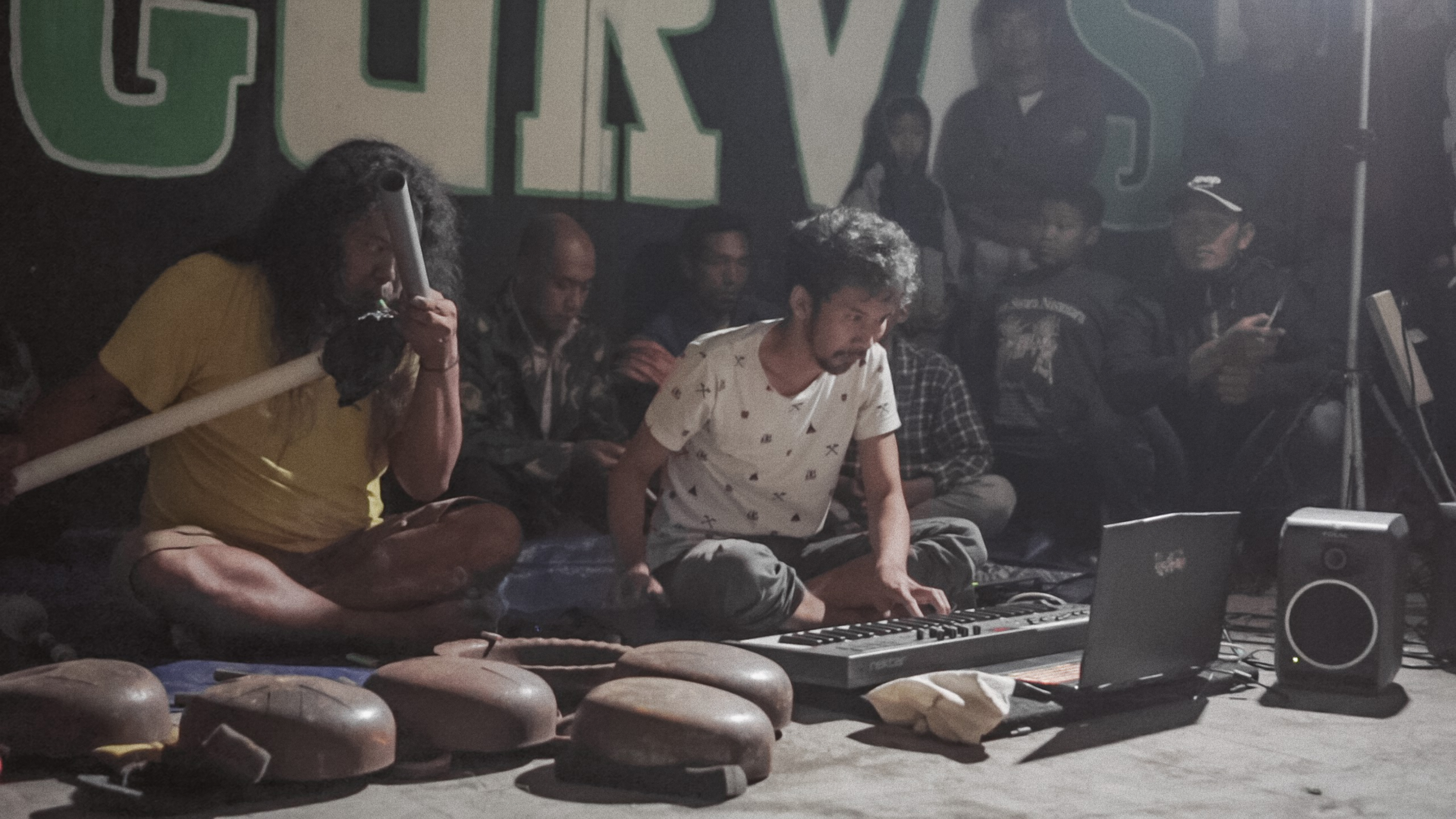
Raja Kirik’s syncopated electronic rhythms combine with the metallic percussion of homemade instruments that is as trance-inducing as it is bellicose. Beautifully monotonous singing in a captivating repetitive melismatic style weaves through lilting melodies that gust out of makeshift wind instruments. With frantic, seemingly endless forward propulsion, the music of Raja Kirik inhabits a wide emotional breadth, cycling from disappointment to anger to loneliness.
Read more about the research and ideas feeding into Raja Kirik in this article by Gunawan Maryanto for Nusasonic, titled »Music and Politics via Raja Kirik«.
In a similar spirit, Ariendra’s solo project Y-DRA examines the potential for resistance in dangdut koplo (or »stupid« in Indonesian), a popular Indonesian music genre that channels the sentiments and experiences of the country's working class. Hybrids of new, vivid, visceral sounds, his album and live show titled »No-Brain Dance« channel koplo’s rhythmic elements alongside techno and IDM to shapeshift between identities and realities, and create individual and collective spaces for resistance.
Phantasmagoria of Jathilan, by Raja Kirik
Phantasmagoria of Jathilan, by Raja Kirik
Rampokan, by Raja Kirik
Rampokan, by Raja Kirik


- Gabber Modus Operandi
- Gabber Modus Operandi ft Wahono x Nakibembe Xylophone Troupe
- Sote
- Y-DRA