Territory: Worldwide
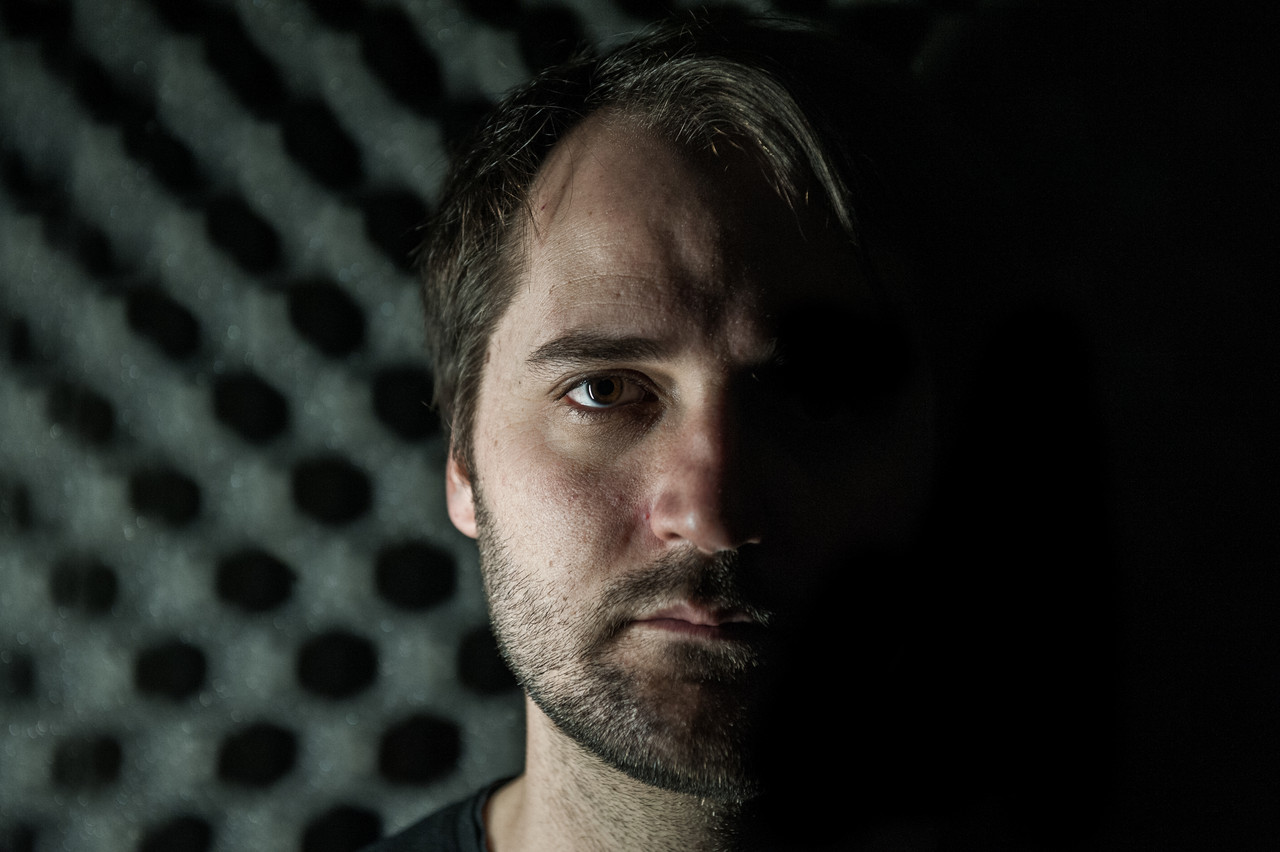
Pierce Warnecke's projects interlace experimental music, digital arts and video art, and are often influenced by the observation of the effects of time on matter and the intensity and limits of sensory experience. He has presented his works at international festivals and spaces, including CTM Festival, MUTEK, LEV Festival, Elektra, Scopitone, Semibreve, ZKM, FILE, ISM Hexadome, Sonic Acts, and NEMO. He has released music on labels raster and Room40, among others. His video work is distributed online through Sedition. He was a Master’s professor at Berklee College of Music in Valencia, Spain until 2019, and currently lives and works in France.
Artist Statement
»My work stems from interest in the effects of time on matter: modification, deterioration and disappearance. Whether the focus is on digital forms or rough materials, large scales of time or microscopic details, the goal of these pieces is to re-adapt existing sonic, visual or physical objects and materials into parallel contexts where their signified meanings, symbols and cultural connections have become residual ghosts; abstractions with loose connections to reality, like distant memories. This speculative method allows me to approach narratives, concepts, abstractions, fiction and sometimes science, creating a large area of interest in my research.
The possibility of altering the 'real' (or one's perception of it) through the intensity of physical experience lies at the core of how the works are composed. I attempt to achieve this intensity by playing on contrasting scales of activity (from static to frenetic) and the limits of human perception in regards to duration, frequency and amplitude of both visual and sonic material. I am interested in using what we can hear and what we can see in order to develop a personal language combining sound, light, movement, color, shape and structure in works that hopefully challenge the public to reassess how we experience the world through our senses by becoming aware of their limits.«
35min AV Performance - Data, privacy, and networked society for profit.
The End Product is an audiovisual performance exposing our daily online experiences and our ambiguous relationship with social media. Through multiple tableaux, it explores different forms of data extractivism, from personal information and physical appearance to location, social interactions and even financial information. The performance, oscillating between humor and malaise, tunes into the particular rhythm of our dopamine-inducing online habits, while diving into the hidden mechanisms behind the ‘feed’, who decides and controls the content, who profits from it, and who endures its effects. The banality and boredom of being online, often sublimated through the broken promise of endless infotainment, is exposed in plain as the performers take the time to check their emails and play games on stage, screens facing the public.
The sheer scale of hoarded data available online is exposed through a deep dive into one of the performer’s entire geolocalisation history over 10 years, followedby a vertiginous acceleration and accumulation of the entire Facebook ad purchase dataset since 2019 (updated before each show for the current country). Spam, the unanimous scourge of the connected era, is unabashedly assumed here, periodically interrupting the audio visual stream and bringing the performance to an unexpected and grinding halt, exposing not only how aggressive it is, but also how accepting we have become of these invasive forms of advertising. Issues of data privacy and bypassing consent are explored through an initial outlandish Terms of Service contract, culminating at the end with an integration of audiences’ faces on screen thanks to their unintended authorization.
Paying homage to Richard Serra and Carlota Fay Schoolman’s 1973 short video ‘Television Delivers People’, the performance The End Product reflects on how social media
continues this tactic of delivering people as products to advertisers and if, perhaps, our data might be more valuable than the services we give it to, often freely and half-knowingly.
Shoshana Zuboff summarizes the current state of our for-profit digital society well in her seminal book “The Age of Surveillance Capitalism” : “The remarkable questions here concern the facts that our lives are rendered as behavioral data in the first place; that ignorance is a condition of this ubiquitous rendition; that decision rights vanish before one
even knows that there is a decision to make; that there are consequences to this diminishment of rights that we can neither see nor foretell; that there is no exit, no voice, and no loyalty, only helplessness, resignation, and psychic numbing.” We acknowledge the support of:
-Canada Council for the Arts
-Auvergne-Rhône-Alpes Region through the SCAN grant
-L’Espace Gantner (Territoire de Belfort).
Residency support from iMal, Interstice, Sporobole and
Recto-Verso.
Pierce Warnecke and Matthew Biederman collaborate on ∆T; an audiovisual exploration that departs from Thomas Hobbes' notion of time as "a phantasm of motion." Delicate textures, snippets of noise, and carefully devised synth fragments coalesce, pulse, and undulate across a multi-channel setup. Envisioned for single-channel video, laser, and 8.2 audio, ∆T premiered at LEV Festival in 2019, and is supported by Berklee College of Music, VYV Montreal / CQAM, LEV, and LABORAL.
Upon working together on the suggestion of Semibreve Festival, Whitman and Warnecke found much common ground.
In Whitman's own words: "We immediately hit it off, professing a shared love for experimental & direct film, and through this Pierce began architecting a lush real-time video performance solution that utilizes the raw control & timing voltages from the “Redactions” & “Generators” patches to generate a gorgeous, high-frame-rate Op-art assemblage that perfectly encapsulates the structural & formal constructs of Live Electronic Music in a cleverly analogous visual language. Even in our debut performance, it was unclear if I was performing to the video, he was performing to the music, or if we were independently utilizing the same signals to achieve discrete results; the exact sort of grey-area that I love & often strive towards."
Warnecke and Whitman have performed together at Semibreve 2018 and Sonic Acts 2019.
SEDIMENTS explores the mineral as a material dimension of our universe; it is a means of perceiving and engaging with memories and senses. Through the prism of time and history, and through the design of various scenes and situations, SEDIMENTS offers a considered reading of stones—a material that is paramount and mysterious, more so than one might think.
VIMEO
SINN + FORM is a project by Pierce Warnecke and Raster Noton’s Frank Bretschneider. It explores the limits of man’s constant attempts to capture and control the world through description and prediction. Reflecting the fact that mathematical and physical theories and models increasingly incorporate chaos and contingency, SINN + FORM (sense + form) takes shape as a modular synthesizer system that produces a constant flow of randomly generated data that influences the musical parameters of pitch, note length, volume, tone.
Bretschneider’s music, recorded on both Buchla and Serge synthesizers at the prestigious EMS Elektronmusikstudion in Stockholm, is fused with Warnecke’s visuals, mechanically produced through printed stills that are modulated through a custom built machine so as to create movement and variations in lighting. The result is a hybrid analogue-digital system that uses light, machine, image and sound to create an interactive multimedia ensemble.
SINN + FORM premiered at CTM 2014 festival in Berlin.
Somnifacient Signals was first created at a distance between Montreal and France during the 2020 confinement, and premiered as a single screen stream at Gray Area Foundation in San Francisco. It was subsequently made available as a collection of video works from Sedition online digital art platform. During confinement, social society retreated inward while simultaneously using the internet as a way to remain connected to one another, learn, work, and even ‘travel’. We thought it was important to reflect on these ideas by using freely accessible live camera feeds from around the world and their connected chat rooms through sampling, video collage, field recording and plunderphonics. These techniques, used within a networked interface, addresses our reduced mobility through a single screen, two speakers and an internet connection to explore the world. By exploiting the real-time of the internet, the sources themselves present multiple possible real-time collaborators to respond to in the performance.
In the context of reduced mobility forced by the current pandemic – but also, on a larger scale related to climate change and ecological mindfulness, it is increasingly important that networked artistic performances become an essential component of future festivals and venues. Somnifacient Signals (Live Stream Version) is a networked performative piece which captivates and connects with audiences remotely as much as a shared physical performance does. How can an immersive audiovisual performance, with multiple screens, a specific stage layout and live performances by the artists, be transformed into a virtual networked orientation while still connecting with audiences? The Somnifacient Signals performance explores this question through a truly networked performance which not only expresses the final sonic and visual result, but also transcribes the interaction between performers, source material and audience through interactive feedback.
The live stream performance focuses on transformation (via destructive real time manipulation) of common prosaic sources using noise, moshing, feedback, extensive compositing / overlaying, saturation and glitch to transform the bland material into an intense and epileptic take on experiencing a mediated world via the internet. The promise of the internet as a place to connect is flooded with ads, glitches and trolls combining to make the internet not a democratic utopia, but instead a place fraught with dangers, misinformation and poor connections, while many CEOs continue to increase their wealth through their exploitation of the medium. Some of the sources we use include trains, city centers, wildlife reserves, chat rooms, internet browsing, beaches, cats in rescue shelters, desktop screens, zoom group calls, etc., reflecting the virtual spaces and mediated places which became one of the only shared common experiences accessible to us during the recent confinement situation.
By using sources culled directly from real-time streams, and allowing for audience members to influence which streams get utilized, the work not only is available on the network, but becomes the network in a sense. Somnifacient Signals (Live Stream) shares with the audience, as generously as possible, all of the elements necessary for an AV performance: sources, processing, communication between performers, graphics, data transmission (control signals), and live cameras in each performer's studio.
The performance can exist as multiple contexts: A fully »traditional« AV performance, with both performers present with the audience, partially networked with one of the performers in a shared physical space with the audience and the other performer at a distance, or entirely streamed with the performers not in the physical space of the audience. The fully streamed version will generate 3 physical spaces: performer 1’s location in Montreal, performer 2’s location in Europe, and the final festival venue space with an audience present. There will also be 3 screen spaces: a central final result of processed video, 2 side spaces to the left and right of the main screen (used for the performers’ local camera, chat windows, network and control performance data, etc) and at the front of the stage below the 3 video projections, 6 LCD screens aligned to create a horizontal menu will display all of the available video sources. This can be seen as a kind of visual radio dial, with multiple stations / channels co-existing in real time, with a scanning component between sources that the visual performer will operate.
The public, either in the physical space, or from online can select from these or suggest through a chat interface any other live streams. Multiple screen layouts, or »virtual stage scenographies« can be prepared, and displayed on this 9-screen layout in an improvised way: in this sense the screen space becomes an instrument itself which the artists can play.